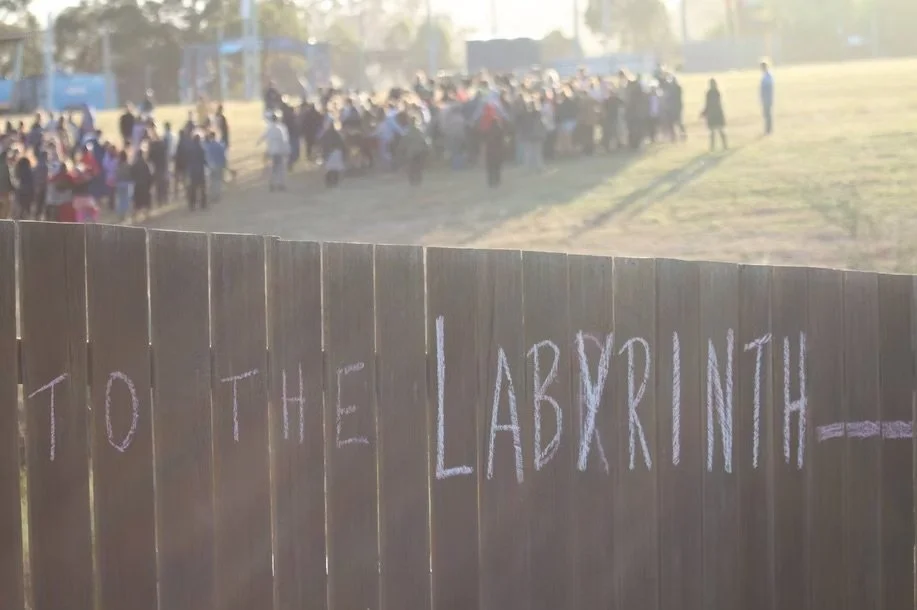
It doesn’t matter what you’re wearing, as long as it’s comfortable. Those of us from the northern states tend to be sporting more layers. It’s still summer in Tassie but apart from a few short hours during the day, it’s seldom particularly warm. Our proximity to the Southern Ocean (which you can see from the campsite) sees to that. Locals are more likely to be wandering around in t-shirts and beanies. Hard core. At least to this city-slicker.
There is no advertising, nothing for sale; no coffee carts or gozleme women. The price of admission covers three square meals a day, all ‘plant-based’. Chickpeas, pumpkin, potato and lentils feature heavily. Ditto brown rice and oats. The mixed salads are a revelation – crunchy, subtle, a crisp, raw contrast to the carbs. We have all brought our own plates and cutlery. Well, most of us. I didn’t get the memo so spend the first couple of days scrounging spares left lying around, until a friend arrives with a container for me.
The event is drug- and alcohol-free. This appears to faze no one. There’s also a level of trust, though, that as we’ve all agreed to the rules before arriving, no one’s likely to break them. There are a few smokers, but not one butt on the ground. No trash at all. As a zero-waste event every effort is made to eradicate waste – and it’s clearly working.
Composting toilets. Solar power. Any leftover food is scraped straight into the compost bins placed conveniently next to the dishwashing station. As a water-saving measure, there are spray-pump bottles (pretty much the only plastic in evidence), some with bubbles, some with water for rinsing. The only hot water is from a tap near the kitchen labelled ‘tea and coffee only’.
The showers are cold.
Outside the loos hang bunches of dried lavender which releases a subtle fragrance when you rub it between your palms. Lavender is a natural antiseptic, I’m told.
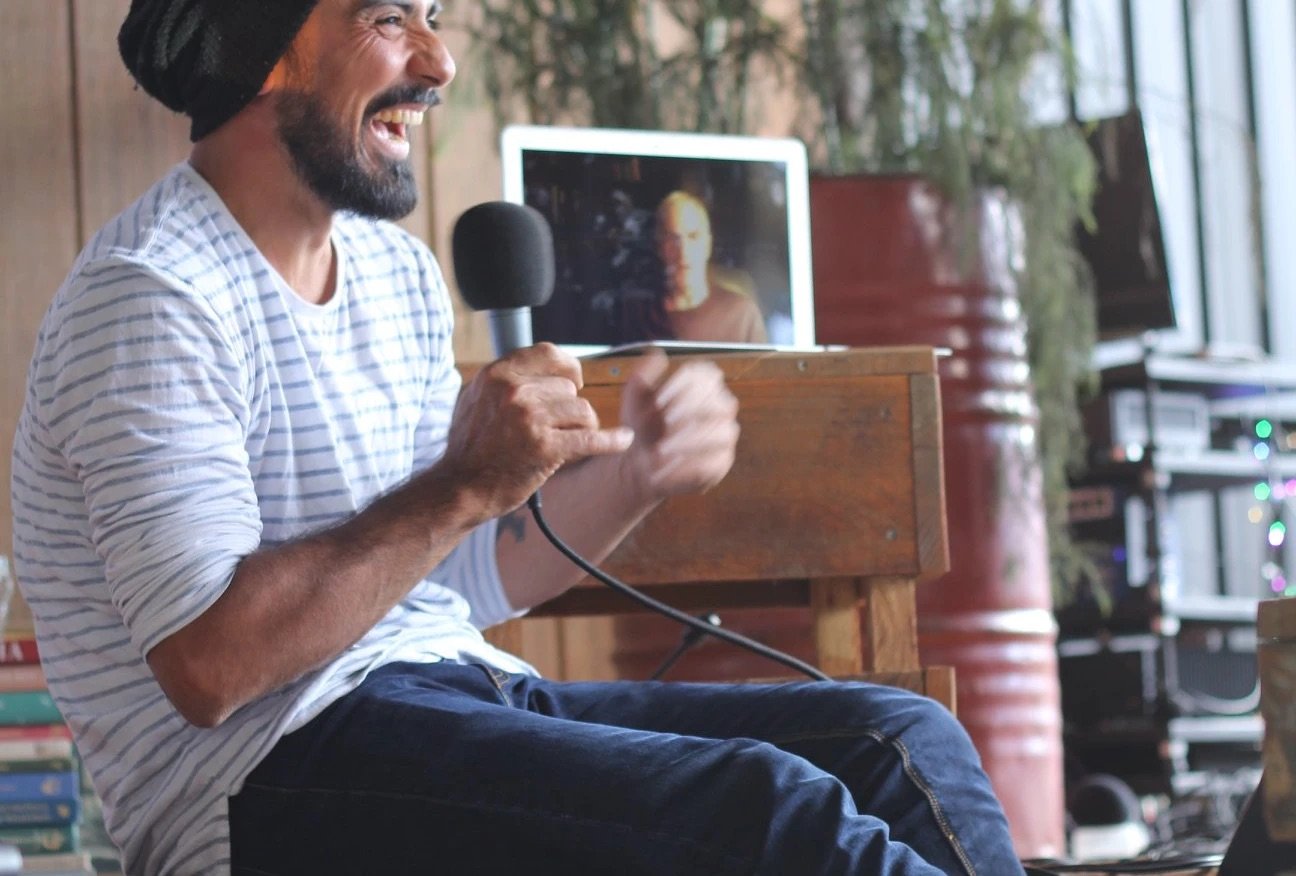
I’m struck by how gentle – softly spoken and genuine – the men here are. They’re outnumbered by female attendees, but not significantly. The tone is set by Erfan Daliri, Newkind founder and organiser.
In his keynote on Day 5, he tells us how he spent nine months in a cottage in a remote part of Tasmania device-free, growing his own food and making cups of tea.
“I’m not looking to be comfortable,” he says. It’s clear he feels things deeply. He suffers with those who suffer. There was a point in his life when this could have broken him. Instead, he took his pain and decided to channel it into making an impact and gathering a tribe around him to help others make an impact too. From this epiphany Newkind was born.
There is a lot of talk of localisation and community and connection and the power of working together. A sense of urgency that unless those of us who ‘give a fuck’ band together we’ll never reach the tipping point required to truly change the system. There is a lot of talk about the ‘system’.
There’s a session on parenting for a peaceful world by the wonderful Robin Grille, who suggests that looking after the world’s children is the best way to prevent so many fucked-up adults. “And isn’t prevention better than treatment?” he asks us. “We don’t have time to treat 7 billion people.”
There is a direct correlation between collective childhood trauma (esp. physical abuse within a patriarchal model) and the tendency for nations to experience conflict. See Russia. Ditto the USA. Ditto the Congo. This theory also probably explains people like Peter Dutton. Ditto Donald Trump. Ditto Vladimir Putin. Not enough hugs as children, clearly.
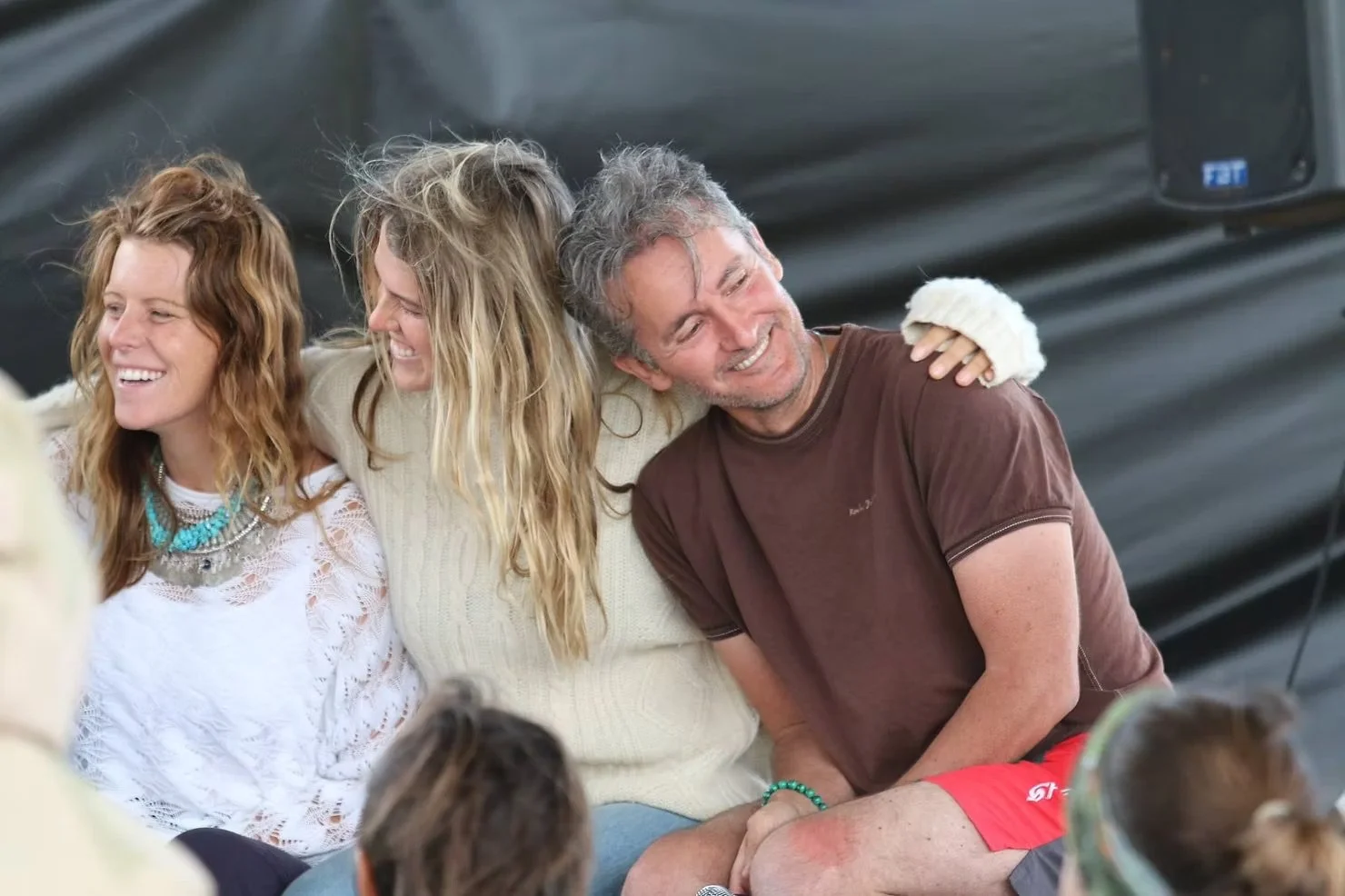
Consensual hugs are abundant at Newkind. There are a lot of gentle people here in need of hugs, so most requests are met with a positive response.
Many of us are feeling understandably fragile, because we’ve been fighting against corporate greed and the horrendous treatment of animals, children, women, the environment – sometimes all of the above – and it’s hard to see an end in sight. We’re a bit exhausted.
On the bus from the airport, one woman, Nikki, tells me: “I’m not a greenie, but I’m a Green. Last election I had my tyres slashed. I love coming to Newkind because I don’t have to hide who I am. This is my tribe.”
For much of the week Nikki wears her Greens t-shirt. Others wear t-shirts from Amnesty, Sea Shepherd, the Adani campaign, and other festivals. There is a lot of hemp and second-hand clothing in evidence. Dreadlocks, tatts, nose rings and small, barefoot children with tousled hair and shining eyes. They look well loved. These are our future leaders.
One presenter can barely contain his excitement talking about the future of solar. “Within the next few years,” he tells us, “we won’t have solar farms, but solar forests. And we won’t need to replace solar panels. Solar will be exponentially more efficient and even less wasteful than it is now.”
The tech for this new way of capturing and storing solar power and turning it into energy comes from ancient Native American practices and approaches combined with the latest R&D coming out of the sector.
We’re starting to look at modern problems through ancient lenses and discovering that often the answers have been there with us all along.
We are reminded that most of our social constructs are fairly recent. It wasn’t that long ago that most people grew their own food, rather than relying on mass production. It used to be the norm to grab a box from the supermarket, or to take a cloth bag, trolley or basket to cart your fruit and veg home. How did we get so used so quickly to free plastic bags that we’re outraged when they’re taken away from us?
We’re reminded how resilient humans are, how quickly we can pivot when faced with a common threat. If we go too far one way, then surely with the right impetus we can just as quickly turn things around?
On the morning of Day 2 we are shown how to make our own toothpaste and deodorant. Turns out the recipe is dead simple, especially if you happen to have coconut oil and tapioca flour to hand.